
VIO, another localization technology
Discover VIO technology, combining visual and inertial data for precise robot localization in various environments.
Introduction
Visual Inertial Odometry (VIO) is an advanced localization technology that combines visual and inertial data to enable robots to accurately position themselves within their environment. By using cameras to capture images and inertial sensors to measure movements, VIO allows for reliable autonomous navigation, even in complex environments or in the absence of GPS signals.
How it Works
VIO relies on the integration of data from cameras and inertial sensors. The cameras capture images to identify visual landmarks, while the inertial sensors measure the robot's movements, such as accelerations and rotations. By combining this data, the system can estimate the robot's trajectory in real-time. This data fusion enhances the accuracy and robustness of localization, even in the presence of vibrations or sudden movements.
Use Cases
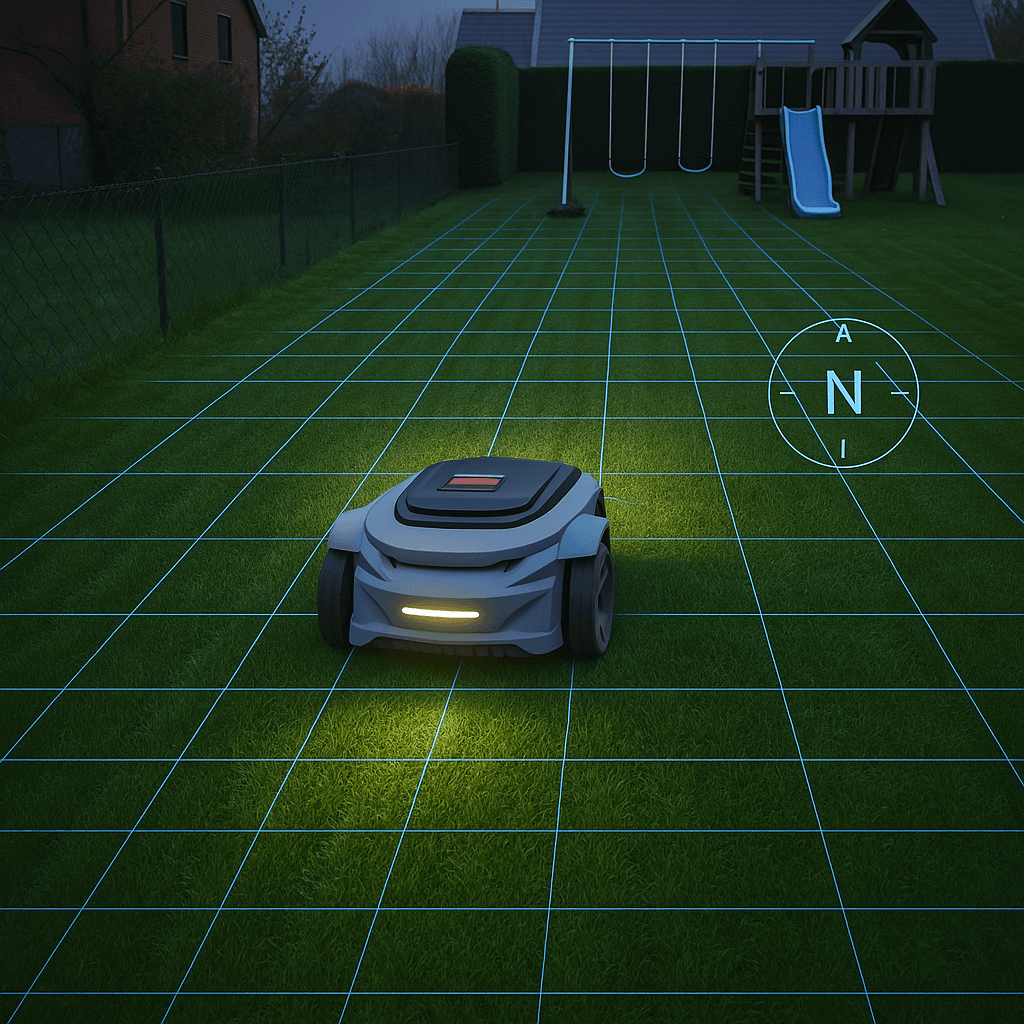
Drones utilize VIO to fly stably and autonomously. By analyzing the images captured by their cameras and the data from their inertial sensors, they can maintain their trajectory, avoid obstacles, and even navigate in areas where GPS signals are weak or nonexistent. This improves the safety and efficiency of missions, particularly for infrastructure inspection or mapping.The Segway X315e Robotic Mower that I had the chance to test combines RTK, VSLAM and VIO for hyper-precise localization.
Differences Between VIO and VSLAM
VIO focuses on integrating visual and inertial data to estimate a robot's position and movement in real-time, primarily using sensors and cameras to maintain a robust trajectory estimate. In contrast, VSLAM goes further by constructing a map of the environment while localizing itself. It often uses visual landmarks to create a map and then uses it to reposition itself later. VSLAM is more focused on creating a detailed representation of the space around the robot. In summary, VIO concentrates on precise localization through inertial data, while VSLAM also builds a visual map for more efficient navigation.
