
ToF: the ultimate localization technology?
Discover ToF technology, a major advancement in 3D localization for robots and smart devices.
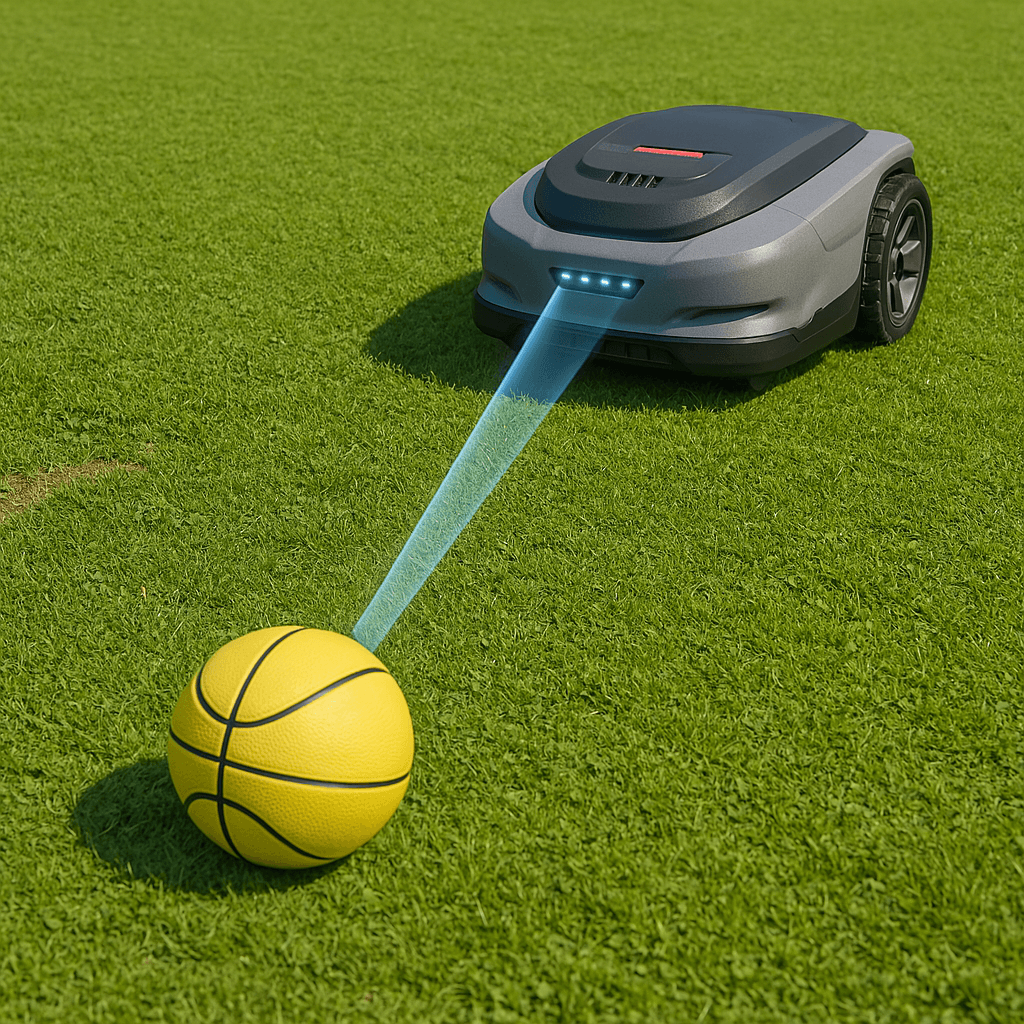
Introduction: What is ToF technology?
When we talk about perception for a robot or an intelligent device, we often think of cameras or infrared sensors. However, there is another technology that allows us to measure the distance between a sensor and an object: ToF technology, or 'Time of Flight'. Literally, it means 'time of flight' – the time it takes for a signal to make a round trip between the sensor and an object. This seemingly simple method allows for extremely precise distance measurements, in real-time, and under various conditions.
How does ToF technology work?
ToF technology is based on a fundamental physical principle: the speed of light. A ToF sensor emits a light pulse (usually infrared) towards a scene. This light bounces off objects and returns to the sensor. By measuring the exact time between the emission and reception of the signal, the device can calculate the distance between itself and each point in the scene.
There are two main approaches:
• Direct ToF : measures the exact time of flight for each photon.
• Indirect ToF : measures the phase of the reflected signal to deduce the distance.
These sensors can generate 3D depth images much like a thermal camera… but with distance as the information.
Use cases
ToF technology has become a standard in many fields:
• Smartphones : ToF sensors are used for autofocus, bokeh effects, and even 3D facial recognition.
• Robots and drones : they enable reliable navigation both indoors and outdoors, even in low light.
• Video games & augmented reality : ToF is used to map a room or detect movements.
• Garden or domestic robotics : as with the Segway X3 series, the ToF sensor helps detect nearby objects, even at night.
ToF: Above the rest
Compared to other systems like Lidar or stereo cameras, ToF has several advantages:
• It works in complete darkness.
• It is often more compact and cheaper than Lidar.
• It offers direct and fast measurements, without requiring heavy processing.
But it also has its limitations: sensitivity to very strong ambient light, sometimes reduced accuracy at long distances, and complexity with reflective surfaces.
ToF, small but mighty
ToF technology has established itself as a cornerstone in the 3D perception of connected objects. Whether for enhancing a smartphone photo or guiding a robot in the dark, its accuracy and ease of integration make it a logical choice in many projects. It’s no coincidence that it is found today in the most modern devices. In my opinion, ToF technology stands as one of the essential pillars for providing precise and efficient spatial localization.
However, combining it with other technologies like VSLAM and/or VIO can further enhance the localization accuracy of an intelligent object in its environment. By combining these technologies, we achieve an intelligent device that truly pushes the boundaries of what technology can offer today.
