
Segway Navimow H215: the best compromise in the range?
Tested over several months in real conditions, the Segway Navimow H215 proves to be the worthy successor to the H1500. More flexible, without an antenna, and still just as effective, it could very well be the best compromise in the range.
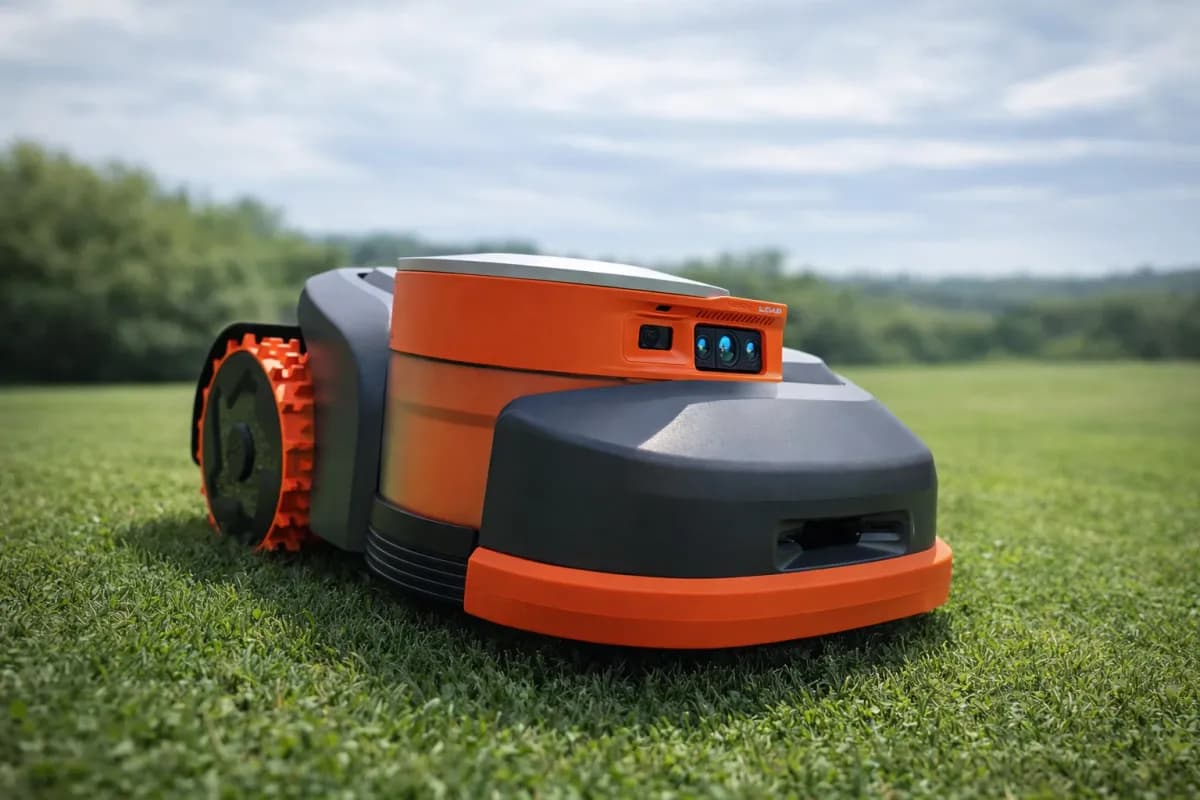
After testing the H1500E for several seasons, and then participating in the beta program for the X315E,I had the opportunity to continue the adventure with a new model: the Navimow H215.
A robot that I was able to use for several months, from the end of last season to the beginning of this one, always as part of the Segway beta testing program.
The goal is clear with this H215: to replace the H1500 while integrating some advancements from the newer models. On paper, it looks like a logical update to the range... but in reality, is it really worth it?
After several weeks in the field, under the same conditions as my previous tests, here is my complete feedback.
A terrain I know by heart
For this test, I didn't change my habits:
same garden of about 900 m², same areas, same constraints.
My terrain is quite "favorable" in the sense that the boundaries are well marked (hedges, fences), which clearly helps the robot navigate. But I also have some more complex areas, particularly a sloped section with stones that I prefer to avoid.
In short, a good mix to form a realistic opinion.
A user experience in continuity
Upon opening, no surprises: the H215 takes exactly the same design cues as the H1500.
Same design, same philosophy, we are clearly in an evolution and not a revolution.


And that's rather reassuring.
The installation, on the other hand, remains a major strong point. It's simple, quick, and intuitive.
I started the automatic mapping by following the robot on foot, calmly. In about ten minutes, it had completed a full tour of the garden. By the time I defined my restricted areas and divided it into three zones, everything was ready in just half an hour.
It's hard to make it more accessible.
The real change: the end of the antenna
If there's one point that really changes the game, it's this one.
The H215 no longer needs an external antenna.
And that, in practice, is a huge advantage.
Essentially, this means you can place your base wherever you want, as long as you have a power supply. In my case, I was able to install it against a wall on the other side of the house, which was impossible with previous generations.
It's simple, but it completely changes the installation flexibility.

Mowing efficiency is always at the same level.
On pure mowing, there’s nothing to complain about.
We are clearly on par with the H1500 and the X315E:
clean, consistent results, no missed areas.
Segway handles this point well, and it’s confirmed here again.
Useful obstacle detection.
The H215 features obstacle detection, and overall, it works well.
But as often, not everything is perfect.
During the beta phase, I had an instance where the robot considered a simple dead leaf or a slightly marked shadow as an obstacle. Result: unnecessary turnaround.
This kind of behavior has been corrected quite quickly through updates, and this is precisely where the beta program makes sense. The team was very responsive to feedback.
Today, the behavior is much more consistent.
A few hardware adjustments (beta version).
An interesting point I observed during the beta testing phase concerns the rear wheels.
On the test models we had, there was a slight lack of weight on the drive wheels. In certain situations, this could lead to a bit of slipping, especially on more delicate areas.
In the most extreme cases, this type of behavior could potentially slightly tear the grass. But in my use, I want to emphasize that I did not notice any real damage to my lawn.
The wheels could sometimes slip, but without consequence.
And above all, this point has been corrected in the retail versions. This is typically the kind of adjustment we expect from a beta program: identifying these small flaws before commercialization.
Tip: make good use of automapping.
A little feedback that can clearly help.
During the automatic mapping, I recommend you follow the robot and intentionally position yourself in the areas you know are problematic.
The robot will detect you as an obstacle... and will navigate around the area.
That’s exactly what I did for part of my garden: a sloped area, with rocks, visually “mowable” but that I prefer to avoid.
Since it’s no longer possible to take a break to manually resume mapping, this tip works very well.
A user experience that remains well-controlled.
What strikes me about these robots is the overall consistency.
Whether it's the H1500, the X315E, or this H215, the same experience is present:
- simple app
- logical behavior
- quick setup
You don't have to ask questions. It just works.
And that's probably one of the biggest strengths of the range.
H215 vs H1500: should you upgrade?
It's an important question.
For my part, my H1500 is still running... and it works like it did on day one.
So if you already have one, honestly, there's no rush to replace it.
The real interest of the H215 in this case is mainly:
- obstacle detection
- and the removal of the antenna
But if your H1500 does the job perfectly, the gain is more about "comfort" than necessity.
H215 vs X315E: the best compromise?
In my case, definitely yes.
The H215 combines:
- the compact format of the H1500
- with the vision and intelligence of the X315E
Result: a versatile, efficient robot, and especially well-suited for a "classic" garden.
My verdict
The Navimow H215 doesn't revolutionize the range, but it intelligently fixes what could still be improved.
Its true strength is its installation freedom and overall balance.
Today, I see it as the best compromise for the majority of users:
simple, effective, precise... and finally free from its antenna.
